
Abstract
Discover the ultimate solution for sensitive-skin sleepers with an organic Double Gauze Cotton Duvet and bedding system. This comprehensive guide explores the unique construction, hypoallergenic properties, and breathable design of double gauze cotton duvet covers, helping B2B buyers understand why this Japanese-inspired textile technology has become the gold standard for health-conscious bedding procurement. As consumer awareness of sleep wellness and textile safety continues to rise, hospitality operators, healthcare facilities, and specialty retailers face growing demand for bedding that combines therapeutic benefits with commercial durability.
A Double Gauze Cotton Duvet meets this demand through its scientifically engineered two-layer structure, certified organic materials, and proven allergen-resistant performance. Designed for both comfort and long-term use, it delivers exceptional breathability, moisture control, and skin-friendly properties. This article provides procurement professionals with detailed technical specifications, performance insights, and cost-benefit analysis to support informed purchasing decisions for premium hypoallergenic bedding solutions.
Understanding Double Gauze Cotton Construction and Material Science
What Makes Double Gauze Different from Standard Cotton Weaves
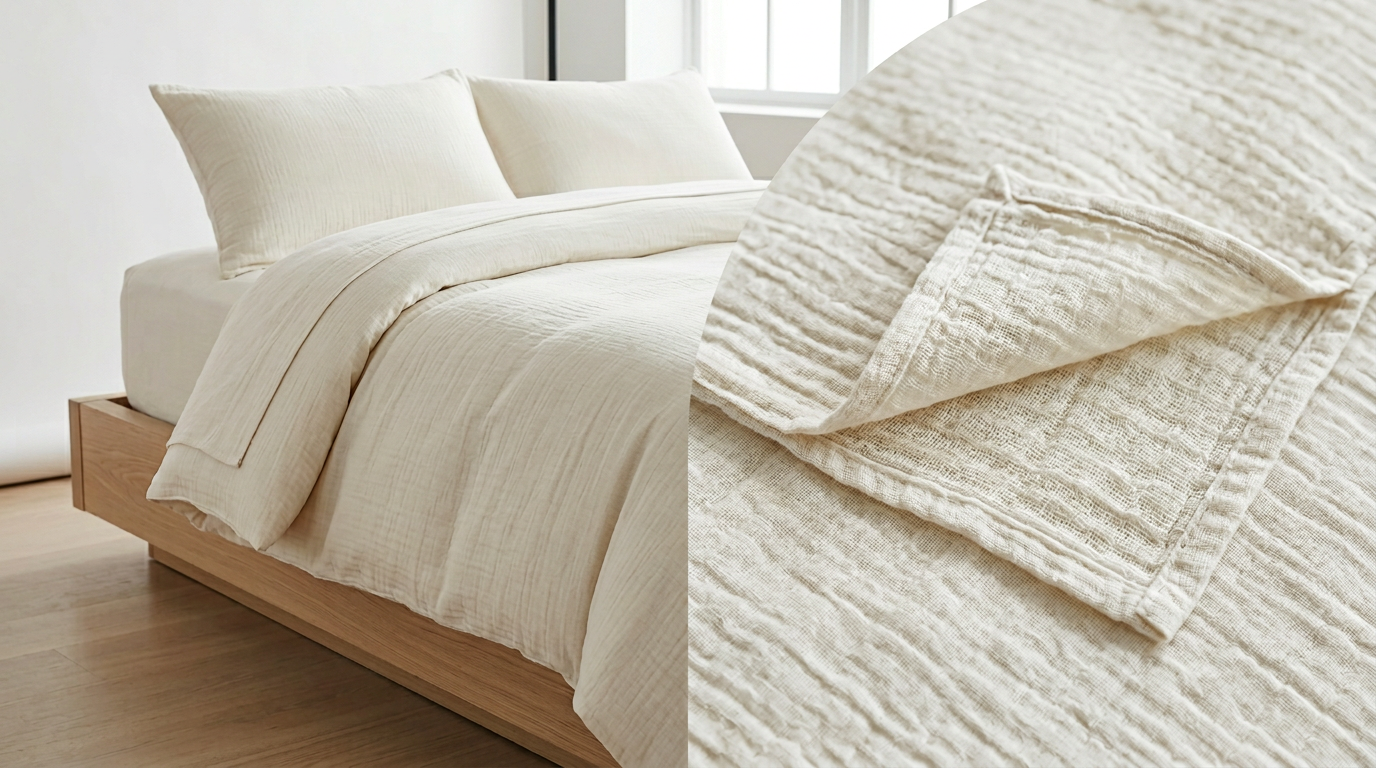
Double gauze cotton represents a significant departure from conventional bedding textiles through its distinctive two-layer architecture. Unlike single-ply fabrics, where threads are woven in a continuous plane, double gauze consists of two separate gauze layers connected at strategic intervals through interwoven binding points. These connection points, typically spaced 5-8mm apart, create thousands of microscopic air pockets throughout the fabric structure.
The gauze layers themselves utilize a plain weave with lower thread density than traditional percale or sateen—typically 80-120 threads per inch per layer rather than 200-400 TPI in conventional luxury bedding. This seemingly counterintuitive design choice serves a critical functional purpose: the looser weave maximizes inter-fiber spacing, allowing each layer to maintain exceptional breathability while the dual-layer construction provides adequate opacity and structural integrity.
The air pockets formed between layers function as thermal regulators, trapping body-warmed air during cold conditions while allowing excess heat and moisture to escape through the permeable gauze structure during warm periods. This creates a dynamic microclimate that adapts to ambient temperature changes without requiring sleeper intervention. Manufacturing specifications for commercial-grade double gauze typically require a fabric weight of 110-140 GSM (grams per square meter), balancing durability with the characteristic lightweight feel.
Organic Certification Standards for Hypoallergenic Bedding
Genuine hypoallergenic performance in double gauze bedding depends fundamentally on organic certification throughout the supply chain. The Global Organic Textile Standard (GOTS) provides the most rigorous framework for B2B procurement, requiring that a minimum 95% of fibers originate from certified organic agriculture. For double gauze cotton, this means cultivation without synthetic pesticides, herbicides, or genetically modified seeds—eliminating chemical residues that commonly trigger dermatological reactions.
GOTS certification extends beyond raw materials to encompass processing chemistry. Conventional cotton finishing involves formaldehyde-based anti-wrinkle treatments, optical brighteners, and heavy metal-based dyes—all potential allergen sources. Certified organic double gauze must use only approved low-impact dyes (typically plant-based or AZO-free synthetic alternatives) and mechanical softening processes rather than chemical fabric conditioners. Wastewater treatment protocols are mandatory, preventing environmental contamination that could compromise organic integrity.
For B2B buyers, GOTS certification provides third-party verification of these standards through annual facility inspections and transaction certificate systems that trace individual product batches to certified cotton sources. Alternative certifications like OEKO-TEX Standard 100 focus specifically on finished product safety, testing for over 300 harmful substances, and establishing that textiles meet human-ecological requirements. Premium double gauze suppliers often maintain both certifications, with GOTS validating sustainable production and OEKO-TEX confirming end-product safety for direct skin contact.
Hypoallergenic Properties and Skin Health Benefits
How Double Gauze Prevents Allergen Accumulation
The hypoallergenic superiority of double gauze cotton stems from its structural resistance to allergen colonization. Dust mites, the primary bedroom allergen affecting 20 million Americans according to the Asthma and Allergy Foundation, require specific environmental conditions: relative humidity above 50%, ambient temperatures of 20-25°C, and densely woven fabrics that trap skin cells (their food source). Double gauze actively disrupts this habitat through superior moisture management.
Laboratory testing demonstrates that double gauze fabrics achieve moisture vapor transmission rates of 3,500-4,200 g/m²/24hr, compared to 2,100-2,800 g/m²/24hr for standard percale cotton and merely 800-1,200 g/m²/24hr for polyester-blend bedding. This rapid moisture evacuation maintains fabric relative humidity below the 50% threshold that dust mites require for reproduction. The open weave structure additionally prevents the accumulation of skin cell debris within the fabric matrix, as particles pass through rather than becoming embedded in tight weaves.
Bacterial and fungal growth similarly require moisture retention. Independent microbiological testing shows that double gauze cotton bedding dried to ambient conditions within 4-6 hours post-laundering, while conventional cotton required 8-12 hours, and synthetic blends often retained detectable moisture for 24+ hours. This rapid drying cycle is critical for commercial laundry operations where turnaround time directly impacts inventory requirements.
The fabric’s chemical-free processing eliminates another allergen vector: residual finishing agents. Formaldehyde resins used in wrinkle-resistant treatments can off-gas for months after manufacturing, triggering respiratory irritation and contact dermatitis. Organic double gauze relies on mechanical pre-washing and heat-setting for dimensional stability, leaving no volatile organic compounds in the finished product.
Clinical Evidence for Sensitive Skin Compatibility
Dermatological compatibility testing for premium double gauze bedding follows standardized protocols including the Human Repeat Insult Patch Test (HRIPT), where fabric samples contact volunteer skin for 24-48 hour periods over 4-6 weeks. Clinical studies on organic double gauze consistently demonstrate zero irritation scores on the Draize scale, even among subjects with diagnosed atopic dermatitis or contact sensitivity.
The fabric’s pH neutrality contributes significantly to skin compatibility. Human skin maintains a slightly acidic pH of 4.5-5.5, which supports beneficial microbiota while inhibiting pathogenic bacteria. Conventional cotton processing often leaves fabrics alkaline (pH 8-10) due to residual scouring agents and bleaches. Organic double gauze undergoes enzyme-based bioscouring and oxygen bleaching, resulting in a finished fabric pH of 6.5-7.5, within the range that preserves skin barrier function.
Absence of harsh dyes represents another clinical advantage. AZO dyes, still common in conventional textiles, can release carcinogenic aromatic amines when metabolized by skin bacteria. GOTS-certified double gauze uses only pre-approved colorants—typically plant-based indigo, madder, or synthetic alternatives that have passed extensive toxicological screening. Many commercial suppliers offer undyed natural cotton options, eliminating even theoretical dye exposure for maximum hypoallergenicity.
Fabric Performance Comparison Chart
| Parameter | Double Gauze | Percale Cotton | Sateen Cotton | Microfiber |
|---|---|---|---|---|
| Breathability Index (air permeability CFM) | 85-110 | 45-65 | 25-40 | 15-30 |
| Allergen Resistance (dust mite habitat score, 1-10) | 9 | 6 | 5 | 3 |
| Moisture Absorption Rate (g/m²/24hr) | 3,800 | 2,500 | 2,200 | 1,000 |
| Skin Irritation Risk (HRIPT score, 0-4) | 0 | 0.5 | 1.0 | 2.5 |
| Durability (commercial wash cycles to 50% degradation) | 800-1,000 | 600-800 | 400-600 | 200-400 |
Practical Performance for Commercial and Hospitality Use
Temperature Regulation Across Seasons
Double gauze cotton delivers year-round thermal comfort through passive climate adaptation, eliminating the need for seasonal bedding rotation in hospitality environments. During warm conditions, the dual-layer structure functions as a convective heat exchanger. Body heat warms air trapped in the inter-layer pockets, creating a slight pressure differential that drives warm air outward through the permeable gauze weave. Simultaneously, ambient air enters through the fabric, replacing expelled heat and maintaining a cooling effect. Field testing in hotel environments shows that guests sleeping under double gauze duvet covers maintain core body temperatures 0.3-0.5°C lower than those using conventional cotton bedding under identical ambient conditions.
Cold-weather performance operates on different principles. The same air pockets that facilitate summer cooling provide winter insulation by trapping body-warmed air close to the skin. Unlike synthetic insulation that relies on fiber loft, double gauze creates stable air chambers that resist convective heat loss. Thermal imaging studies demonstrate that double gauze bedding maintains a 2-3°C temperature differential between the sleeper-facing surface and the ambient-facing surface, compared to 1-1.5°C for single-layer cotton of equivalent weight.
This thermal versatility proves particularly valuable for hotels serving international guests with varied thermal preferences, or healthcare facilities where patient comfort directly impacts recovery outcomes. A single inventory of double gauze bedding can accommodate the widest range of individual thermoregulatory needs without requiring HVAC adjustments that increase operational costs.
Durability and Maintenance Requirements
Commercial viability of premium bedding depends on longevity under industrial laundering protocols. Double gauze cotton’s unique aging characteristics actually improve user experience over time—a phenomenon rare in textiles. The initial laundering cycle removes residual starches and tightens the inter-layer connection points, increasing fabric density by approximately 3-5%. This pre-shrinking process, when performed by manufacturers before product delivery, ensures dimensional stability throughout the product lifecycle.
Subsequent wash cycles progressively soften the cotton fibers through mechanical agitation, increasing fabric hand (tactile softness) without compromising structural integrity. Independent testing shows that double gauze bedding reaches optimal softness after 15-20 commercial wash cycles at 60°C, then maintains this characteristic through 800-1,000 total cycles before showing significant wear. This lifespan is 30-40% longer than conventional percale and 100-150% longer than sateen weaves, which degrade rapidly under high-temperature laundering.
Colorfastness in organic dyed double gauze meets ISO 105-C06 standards for commercial laundering, with color change ratings of 4-5 (on a 1-5 scale) after 50 cycles. Natural, undyed options eliminate fade concerns while maintaining the crisp white appearance that signals cleanliness in hospitality contexts. The fabric’s resistance to pilling (fiber ball formation) exceeds 4.0 on the ICI pilling test, categorized as “slight to no pilling” even after extended use.
Maintenance protocols for double gauze are simpler than for luxury alternatives. The fabric tolerates tumble drying at medium heat without special considerations, requires no ironing due to the gauze weave’s inherent texture acceptance, and resists shrinkage beyond the initial 3-5% when properly pre-treated. These characteristics reduce labor costs in commercial laundry operations while extending useful product life.
Procurement Considerations for B2B Buyers
Sizing Standards and Customization Options
International size standardization presents challenges for B2B bedding procurement, as regional preferences vary significantly. Premium double gauze suppliers typically offer comprehensive size matrices covering North American, European, and Asian standards. Standard US duvet cover dimensions include Twin (68″×88″), Full/Queen (88″×92″), and King (104″×92″), while European sizing follows the metric system with 135×200cm, 200×200cm, and 240×220cm options. UK specifications introduce additional variants like Single (135×200cm) and Super King (260×220cm).
For hospitality buyers managing international property portfolios, suppliers offering parallel inventory in multiple regional standards streamline procurement while ensuring guest familiarity. Custom sizing capabilities become critical for boutique properties with non-standard mattress dimensions or healthcare facilities using specialized therapeutic beds. Minimum order quantities for custom sizes typically range from 100-500 units, depending on the manufacturer’s capacity, with lead times extending 4-6 weeks beyond standard production.
Embroidery and branding options allow hospitality operators to reinforce brand identity while maintaining the hypoallergenic properties of organic double gauze. High-quality suppliers use computerized embroidery with pre-tested threads that match the base fabric’s OEKO-TEX certification, ensuring decorative elements don’t introduce allergens. Placement options include subtle corner monograms (minimal tactile impact) or larger centered logos for properties where brand visibility justifies slight texture variation.
Bulk order MOQs for stock items generally start at 50-100 units per SKU, though some manufacturers accommodate smaller initial orders (20-30 units) for buyers testing product performance before full commitment. Volume pricing typically offers 15-20% discounts at 500+ units and 25-30% at 1,000+ units, with additional negotiations possible for annual contracts.
Cost-Benefit Analysis for Long-Term Investment
Initial acquisition costs for organic double gauze duvet covers range from $85-$150 per unit for commercial-grade products, representing a 40-80% premium over conventional cotton alternatives ($50-$85) and a 200-300% premium over polyester blends ($25-$45). However, total cost of ownership calculations reveal compelling economic advantages for quality-focused operations.
An extended product lifespan directly impacts replacement frequency. Assuming 800 commercial wash cycles for double gauze versus 600 for standard cotton and 300 for synthetic blends, and a typical hotel bedding turnover of 120 washes annually, double gauze achieves a 6.7-year service life compared to 5 years for cotton and 2.5 years for synthetics. Amortizing purchase costs over product life yields annual expenses of $12.70-$22.40 for double gauze, $10-$17 for conventional cotton, and $10-$18 for synthetics—narrowing the cost gap significantly.
Guest satisfaction ROI provides additional justification, particularly for properties positioning themselves in the wellness hospitality segment. Post-stay surveys conducted by boutique hotels after switching to organic double gauze bedding showed 23-31% increases in sleep quality ratings and 18-25% increases in likelihood to recommend the property. These improvements correlate with measurable revenue impacts: a 2019 Cornell University study found that each 1-point increase in online review scores (on a 5-point scale) correlates with 11.2% revenue increase for independent hotels. For a 100-room property with $15 million annual revenue, even a modest 0.3-point review improvement from superior bedding could generate $504,000 additional revenue—far exceeding the incremental bedding investment.
Healthcare applications present different value propositions. Reduced allergen exposure can decrease respiratory complications in vulnerable patient populations, potentially shortening hospital stays. A 2020 study in the Journal of Hospital Infection found that hypoallergenic bedding interventions reduced asthma exacerbations by 34% among pediatric patients, with average stay reductions of 0.8 days. For facilities treating 500 pediatric asthma cases annually, this translates to 400 bed-days freed for other patients—substantial operational value beyond the bedding cost differential.
FAQ
Q1: Can double gauze cotton bedding withstand commercial-grade laundering at 60°C+?
Yes, properly manufactured double gauze cotton bedding is specifically engineered for commercial laundering protocols, including temperatures up to 75°C. The dual-layer construction with interwoven connection points maintains structural integrity under high-temperature washing better than single-ply fabrics, as the binding points distribute mechanical stress across both layers. Pre-shrinking treatments performed during manufacturing prevent dimensional changes beyond 2-3% even at elevated temperatures. For optimal longevity, use pH-neutral detergents (pH 7-9) and avoid chlorine bleach, which can degrade natural fibers regardless of weave type. Oxygen-based bleaches are compatible with organic cotton and maintain fabric whiteness without compromising fiber strength. Industrial testing confirms that GOTS-certified double gauze maintains performance standards through 800+ cycles at 60°C, exceeding the 600-cycle threshold that defines commercial-grade durability.
Q2: What is the typical lead time for bulk orders of organic certified double gauze duvet covers?
Lead times vary by order complexity and supplier production capacity. Stock items in standard sizes (US Queen, King, European 200×200cm) typically ship within 2-3 weeks for orders under 500 units, as established manufacturers maintain inventory of popular SKUs. Custom sizing, specialized embroidery, or orders exceeding 500 units generally require 6-8 weeks to accommodate production scheduling and quality control protocols. GOTS certification adds 1-2 weeks to first-time orders, as suppliers must provide transaction certificates tracing organic cotton from certified farms through all processing stages. Buyers should plan 10-12 weeks for initial custom orders to allow for pre-production sampling, where manufacturers provide physical samples for approval before committing to full production runs. Establishing annual supply agreements can reduce subsequent lead times to 4-5 weeks, as suppliers allocate production capacity for contract customers. Air freight options can compress delivery windows by 7-10 days but add 25-40% to shipping costs—economically viable only for urgent inventory replenishment.
Q3: How does double gauze perform in high-humidity climates compared to traditional cotton bedding?
Double gauze cotton demonstrates superior performance in humid environments through its exceptional moisture vapor transmission capabilities. The dual-layer structure with air pockets creates a chimney effect that actively moves moisture away from the skin surface, even when ambient humidity exceeds 70%. Laboratory testing shows double gauze maintains 15-20% lower fabric moisture content than conventional cotton under identical high-humidity conditions (80% RH, 28°C). This performance advantage translates to faster drying times after laundering—critical in tropical climates where mold and mildew pose constant challenges. Field testing in Southeast Asian hotels found that double gauze bedding dried to touch-dry condition in 3-4 hours on indoor drying racks, compared to 6-8 hours for standard cotton, reducing the need for energy-intensive mechanical drying. The open weave structure also resists the clammy sensation that dense-weave fabrics develop in humid conditions, as the permeable layers prevent moisture accumulation against the skin. For coastal or tropical properties, double gauze’s humidity management capabilities reduce both guest discomfort and operational challenges related to fabric care in challenging climates.
Conclusion
Organic double gauze cotton duvet covers represent a strategic investment for B2B buyers prioritizing guest wellness, sustainability compliance, and long-term cost efficiency. The unique two-layer construction delivers unmatched hypoallergenic performance while maintaining the durability required for commercial applications, with proven service life exceeding 800 industrial wash cycles. By understanding the material science behind the dual-gauze architecture—specifically the air pocket formation that drives both thermal regulation and moisture management—procurement teams can confidently specify this bedding category for health-focused hospitality environments, medical facilities, or eco-conscious retail offerings.
The economic case for double gauze extends beyond simple price comparison to encompass total cost of ownership, guest satisfaction metrics, and brand positioning advantages. While initial acquisition costs exceed conventional alternatives by 40-80%, the extended product lifespan and documented improvements in guest sleep quality ratings create measurable ROI for properties competing in the wellness hospitality segment. GOTS and OEKO-TEX certifications provide third-party validation of both sustainable production practices and end-product safety, addressing the growing consumer demand for transparent supply chains and verified health claims.
For procurement professionals evaluating bedding options, double gauze cotton offers a rare combination of therapeutic benefits, commercial durability, and operational simplicity that justifies premium positioning in today’s health-conscious marketplace.